
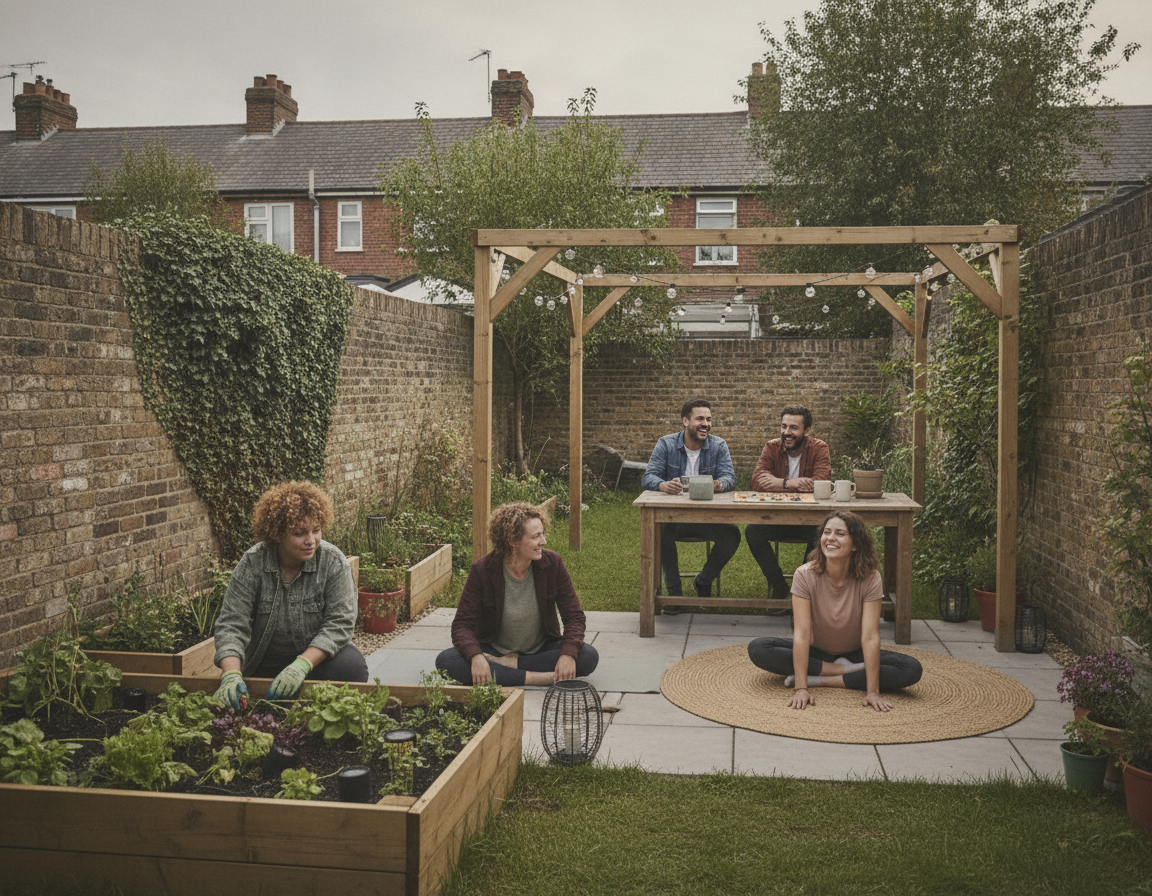
Most underused gardens aren’t a size problem. They’re a purpose problem. If the only reason to go out there is the bins, no amount of plants will change that.
Key Takeaways
- An underused garden is a purpose problem, not a size problem.
- Zoning into two or three areas makes a garden feel bigger and more considered.
- Shelter and lighting buy you the most extra usable days.
- Combination garden buildings give you a room without losing your storage.
- Low-maintenance planting keeps things looking cared for with minimal effort.
Start with one honest question: what would you actually do out there if the space allowed it? Work, eat with friends, store the bikes somewhere that isn’t the hallway? Answer that and the garden makeover ideas below become a plan rather than a wish list. Not every garden needs a full transformation, either. Some fixes take a weekend; others, like a dedicated garden building, are a proper project. Both are valid.
1. Zone the Space First
A garden that reads as one empty rectangle gets used like one: barely. Splitting it into two or three areas with different jobs makes it feel purposeful and, oddly, bigger.
You don’t need walls. A change of surface, a run of planters or a large outdoor rug under a seating set will all signal where one zone ends and the next begins, the same trick our small space home décor hacks use indoors.
Mark the shapes out with chalk or string before ordering furniture. Plenty of people buy a six-seater dining set only to find there’s no room to pull the chairs out.
2. Add Shelter and Lighting
Shelter does more for usability than anything else: a cantilever parasol, a pergola with a retractable canopy, or a canopy over the back door.
Lighting is the other half. Wall lights by the door, festoon bulbs overhead and a few solar stakes along a path keep the garden usable after dark, which is useful if you’re hosting, so read it alongside our guide on making your home hosting ready.
Then add somewhere to put things down (a side table or a flat-topped bench) and a basket of blankets by the door. Cheap changes that shift behaviour immediately.
3. Sort the Storage
Garden clutter is a quiet killer of usable space. Bins, bikes, scooters, cushions, tools and the paddling pool all have to live somewhere, and when they live in the middle of the lawn, the lawn stops being a lawn.
Storage benches that double as seating, a slimline vertical shed down the side return, and a bin store with a planted top are all worth considering. Painting timber storage the same dark colour as a fence helps it recede rather than shout.
@fourthhome_ One whole year of adding soul and storage to our new build in the British countryside. We actually had the home valued (boring admin reasons) shortly after doing a lot of the work and he said we added value with all the storage. 😊 We added built in storage in every single room downstairs. I think many new build homeowners get away with freestanding storage furniture but I just love a built in because it maximise ALL space- both width and height. And as a family of 4 we need it ALL 🙌. #storagehacks #diyprojects #ikeahack #newbuildhomes #builtin
4. Add a Garden Building
A standard garden room usually replaces the shed, leaving the shed contents homeless. Combination buildings solve this, and Surrey Hills Garden Buildings combination rooms are one example, pairing an insulated room with a separate storage section under one roof.
Sort the specification before the styling: insulation, double glazing, a proper electrical supply and a floor that isn’t cold in February.
Outbuildings often fall under permitted development in England if single storey, not self-contained living accommodation, and within the height limits. Rules differ in Scotland, Wales and Northern Ireland, so check with your local planning authority first.
5. Design for How You Actually Live
If you’ve got children, the garden has to survive them. A corner of bark chippings or artificial grass takes the trampoline and the muddy footprints, while keeping the paved area clear for adults is a reasonable compromise.
Hobby space counts too. A potting bench, a tap and a tucked-away compost bin make gardening likelier to happen. A level, well-drained slab in a sheltered corner serves equally well for a workbench, a bike stand or an outdoor gym mat.
6. Choose Low-Maintenance Planting
Low maintenance garden makeover ideas aren’t a cop-out, they’re what keeps the space looking cared for in a busy year. Evergreen structure (box, pittosporum, ornamental grasses) carries the garden through winter, with a few pots of annuals for colour when you want the effort.
Mulching beds properly cuts weeding dramatically, and grouping pots together makes watering a two-minute job rather than a tour of the garden. As a budget option, painting the fence a uniform dark shade is still the cheapest way to make planting look deliberate.
Before You Start
Five questions, before you spend a penny.
- Times you used the garden last month, and what for.
- What you’re short of indoors: workspace, storage, quiet, somewhere to eat.
- What stops you going out there: rain, clutter, no shade, no lighting.
- The one change that removes it.
- Weekend job, saving plan, or proper build.
With the UK garden buildings market worth around £266 million in 2024, plenty of people have worked this out already: start with the obstacle, not the Pinterest board, and the rest tends to follow.
FAQs
Can Renters Make Any of These Improvements?
Outdoor rugs, freestanding furniture, festoon lighting, container planting and portable storage are all renter-friendly and leave no trace. Anything structural needs written permission from your landlord first.
How Long Does It Take to Have a Garden Building Installed?
Lead times typically run from six to fourteen weeks, with groundwork adding another one to two weeks beforehand. If planning permission is needed, add the council’s determination period of around eight weeks.
What Is the Best Order to Tackle Garden Improvements?
Start with whatever stops you using the space (clutter, shelter, lighting), then sort storage, then zone the garden before buying furniture. Larger projects like a garden building are easier to plan once the layout is settled.


